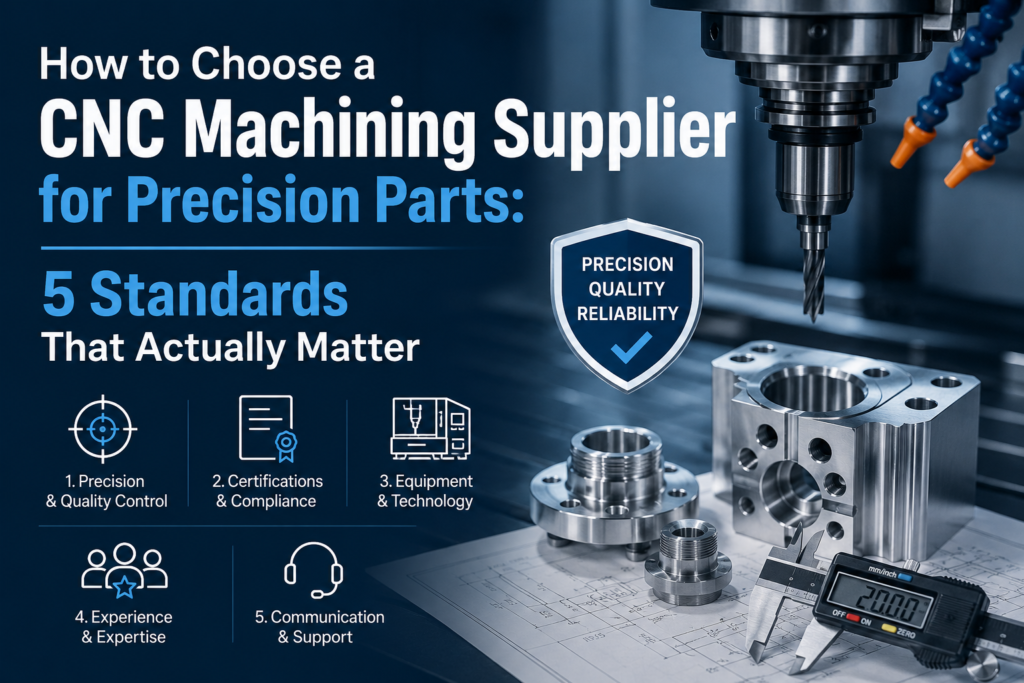
Choosing a CNC machining supplier for general commercial parts is one decision. Choosing one for precision parts — components where dimensional failure creates safety risks, assembly failures, or regulatory non-compliance — is an entirely different exercise. The margin for supplier error is smaller, the cost of discovering problems late is higher, and the criteria for evaluation need to be correspondingly more rigorous.
This guide focuses on the five standards that most reliably predict whether a CNC supplier can consistently deliver precision parts — not just a good first article.
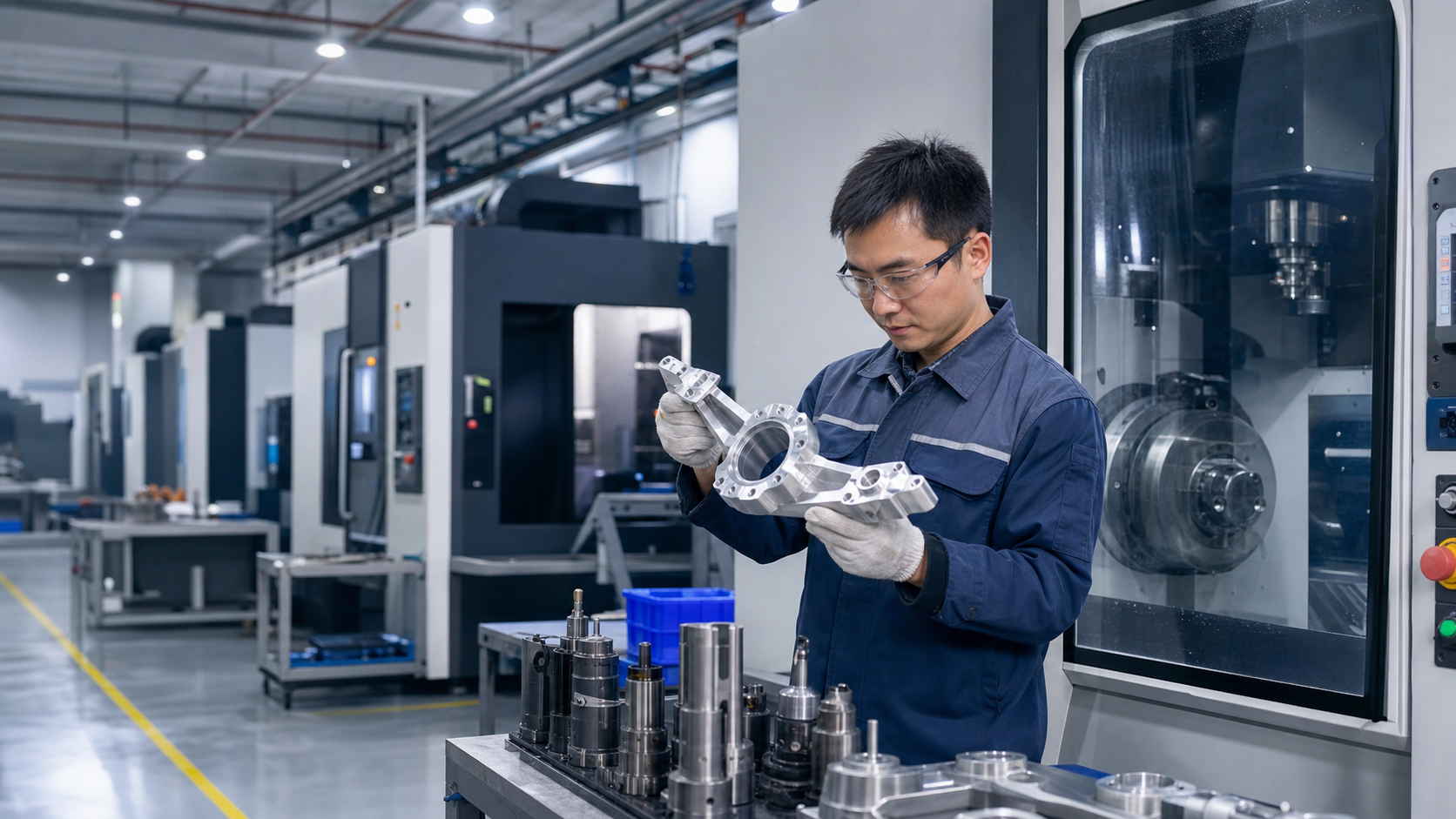
A capable precision supplier should be able to explain how machining, inspection and production control work together.
Why General Supplier Criteria Aren't Enough for Precision Work
Most supplier evaluation frameworks focus on price, lead time, and a general quality certification. For precision machining, these criteria are necessary but not sufficient. A supplier with ISO 9001 certification and competitive pricing can still produce precision parts with unacceptable yield rates if their process capability, measurement systems, and engineering engagement don't match the requirements.
Precision parts — parts with tolerances of ±0.025mm or tighter on critical features, geometric controls, or surface finish requirements that directly affect function — require evaluation criteria that probe process capability, not just quality intent.
The 5 Standards That Predict Precision Supplier Performance
Standard 1: They Own Their Manufacturing Process
The first and most fundamental question in precision supplier evaluation is whether the supplier controls their own manufacturing process. A factory that owns and operates its machining equipment, employs its own machinists and engineers, and performs in-house inspection controls every variable that affects part quality. A trading company or broker that subcontracts to a network of shops controls none of them.
For precision parts, process control is everything. Tolerance consistency across a production run depends on machine calibration, tooling management, fixturing stability, and in-process measurement — all of which require direct control of the manufacturing environment. Ask directly: do you own your machines? Who performs your quality inspection? The answers tell you immediately whether you're talking to a manufacturer or a middleman.
Standard 2: They Can Prove Tolerance Capability — With Data
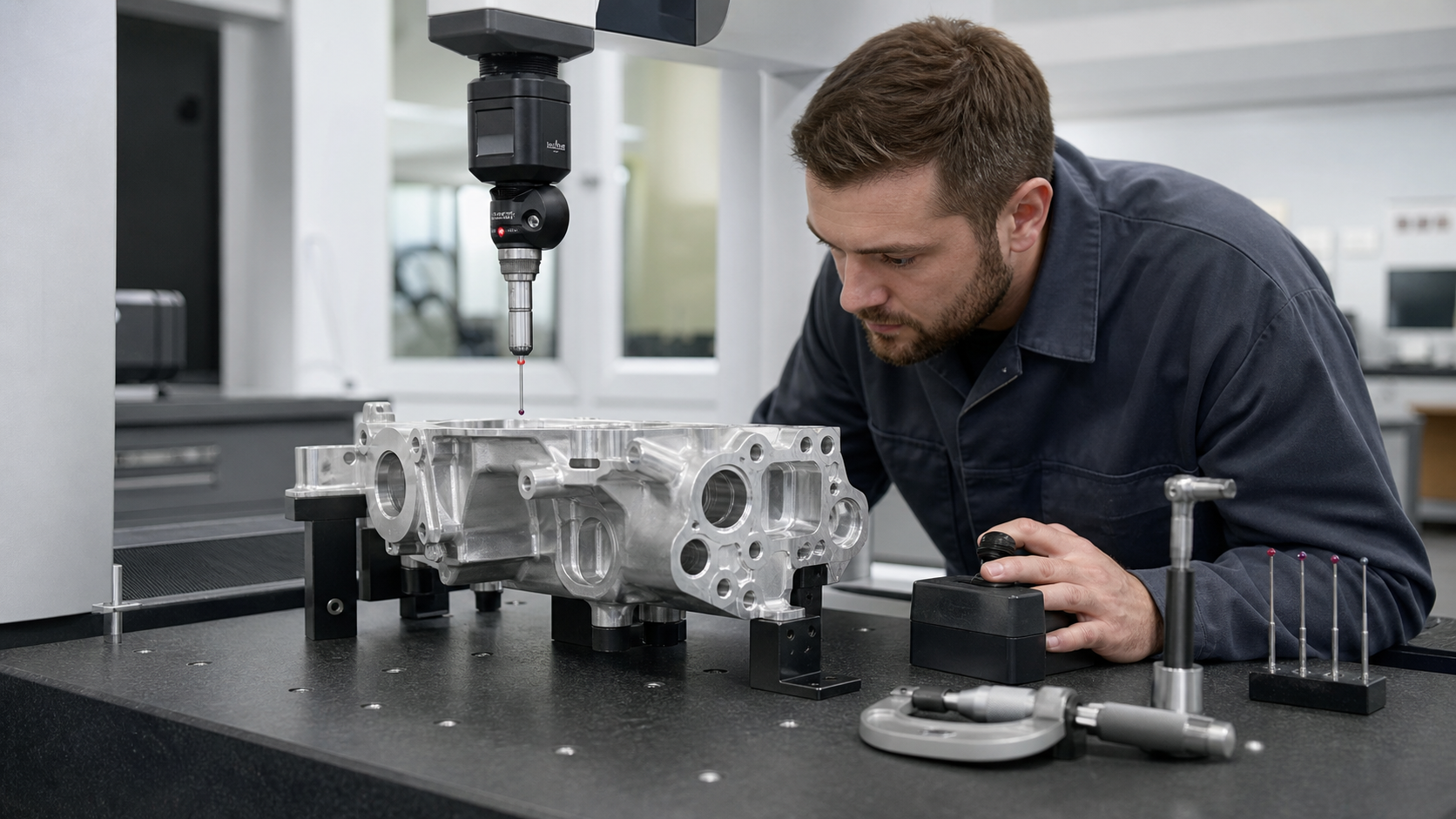
Measurement records are more useful than an unsupported tolerance claim.
Tolerance claims without measurement data are marketing, not manufacturing reality. Any supplier can state that they hold ±0.005mm. A supplier who actually holds ±0.005mm consistently can show you CMM reports from recent production orders demonstrating that capability.
When evaluating a precision supplier, ask for dimensional inspection reports from parts they've produced that are comparable to yours in complexity and tolerance requirements. Look at actual measured values, not just pass/fail stamps. A part where every critical dimension sits at the edge of tolerance on the first article will drift out of tolerance in production as tools wear and conditions change. A supplier whose CMM data shows consistent centering within the tolerance band has process control — not just lucky parts.
Standard 3: Quality Documentation Is Standard, Not Special
In precision manufacturing, quality documentation isn't a premium service — it's evidence that the quality system is real. Material certifications with mill traceability, dimensional inspection reports, first article inspection packages, and certificates of conformance should be standard deliverables, not items that require negotiation or additional cost.
A supplier who treats documentation as optional is signaling that their quality system exists primarily on paper. Conversely, a supplier who proactively provides complete documentation packages — because it's how they operate, not because you asked — is demonstrating the kind of quality discipline that produces consistent precision parts over time.
Standard 4: They Have Engineering Capability, Not Just Machining Capacity
Precision parts frequently have drawings that require interpretation — GD&T callouts that interact with each other, tolerance stack-up considerations, features that are difficult to measure using standard equipment, or DFM concerns that could affect yield. A supplier with genuine engineering capability reviews your drawing before production starts and raises these issues proactively. A supplier without it runs whatever arrives and calls you when parts fail inspection.
Test this during the quoting process. Submit a drawing with at least one GD&T callout and observe the response. Does the supplier's quote acknowledge the geometric tolerance and describe how they'll measure it? Do they flag any concerns about the drawing? Engineering engagement at the quote stage is a reliable predictor of engineering engagement during production.
Standard 5: They Track and Share On-Time Delivery Performance
Delivery reliability for precision parts matters more than for general commercial parts because precision components are often on the critical path — the assembly doesn't proceed until the part arrives. A supplier who consistently delivers one week late for a commodity part is an inconvenience. One who delivers late for a precision component that holds up a production line is a serious operational problem.
Ask prospective precision suppliers for their on-time delivery rate over the past two quarters. A well-run supplier tracks this metric and knows their number. A supplier who doesn't track OTD performance doesn't consider it important — which tells you something about how they'll perform when your deadline conflicts with another customer's.
Building the Relationship That Delivers Consistent Precision
Supplier qualification for precision parts is a starting point, not a conclusion. The suppliers who deliver consistent precision performance over years are those with whom you've built a genuine working relationship — where your requirements are understood at the engineering level, your parts are a known quantity in their production scheduling, and problems are surfaced and resolved before they affect your assembly line.
This kind of relationship is built through consistent communication, clear and complete drawings, realistic timelines, and feedback on performance — positive and negative. Precision machining is a technical partnership, not a spot transaction, and it performs best when treated as one.