Cnc Machining

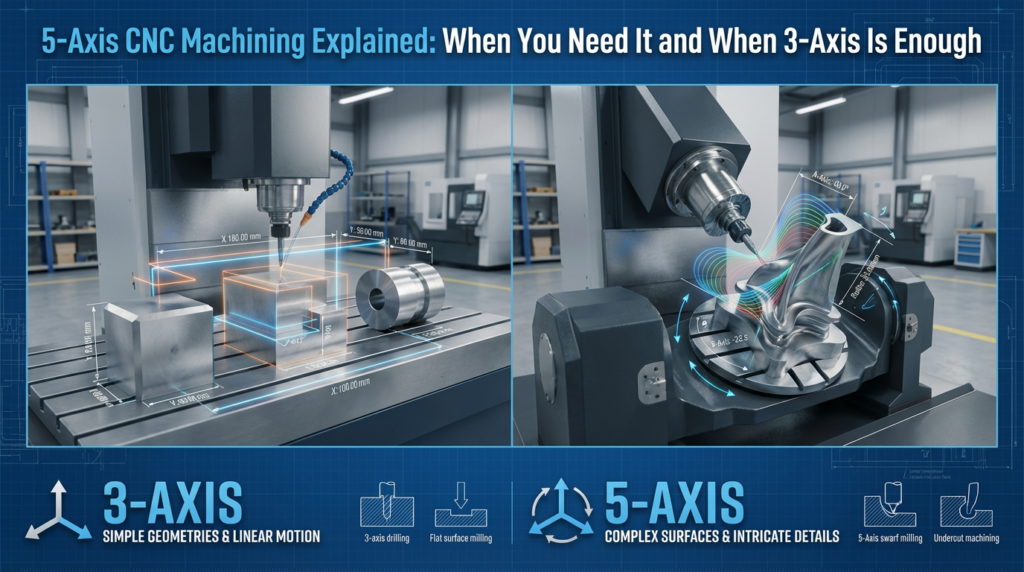
5-Axis CNC Machining Explained: When You Need It and When 3-Axis Is Enough

Five-axis CNC machining gets talked about as if it’s automatically better than three-axis. It isn’t — it’s more capable for certain geometries, but it comes with higher machine rates and longer programming time. Specifying 5-axis machining for a part that doesn’t need it is an unnecessary cost. Not specifying it for a part that does […]

5-Axis CNC Machining Explained: When You Need It and When 3-Axis Is Enough Read More »
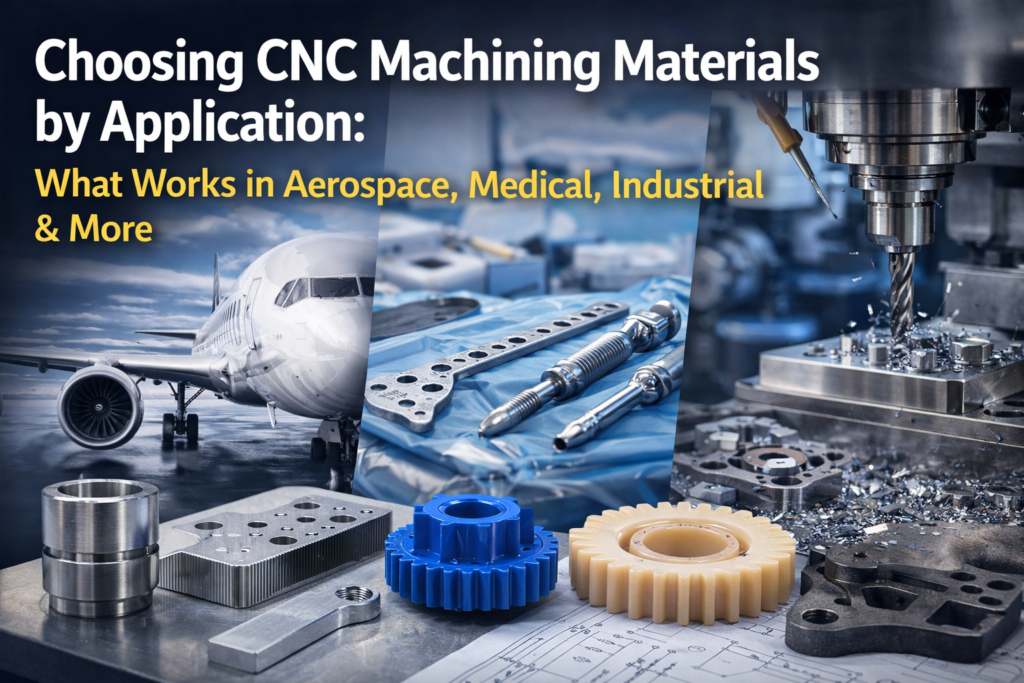
Choosing CNC Machining Materials by Application: What Works in Aerospace, Medical, Industrial & More

Most material selection guides start with the material and work toward the application. This one does the opposite — because that’s how engineers actually think when they sit down to spec a part. You know what it needs to do. The question is what it should be made of. Here’s a practical breakdown of the

Choosing CNC Machining Materials by Application: What Works in Aerospace, Medical, Industrial & More Read More »

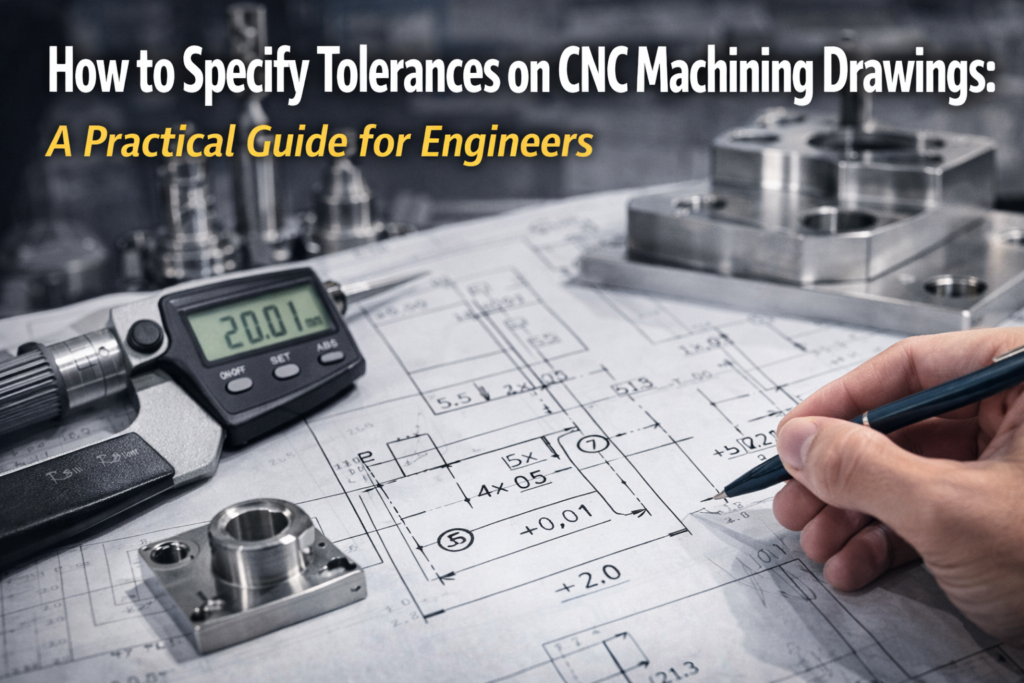
How to Specify Tolerances on CNC Machining Drawings: A Practical Guide for Engineers

A CNC machining drawing is a contract between you and your manufacturer. When it’s clear, complete, and correctly toleranced, everything runs smoothly. When it’s ambiguous, over-constrained, or missing key callouts, you get late quotes, production delays, and parts that don’t work — even when the machining was technically correct.
This guide covers the practical mechanics of tolerancing a CNC machining drawing correctly: what to specify, where to apply tight tolerances, how to use GD&T effectively, and the mistakes that cost engineers the most time and money.

How to Specify Tolerances on CNC Machining Drawings: A Practical Guide for Engineers Read More »

How to Evaluate a CNC Machining Supplier: 7 Questions Every Buyer Should Ask

Finding a CNC machining supplier is easy. Finding one you can trust with production parts, tight deadlines, and zero-defect requirements is a different challenge entirely. The global market is flooded with options — from local job shops to overseas factories — and the difference between a reliable long-term partner and a costly mistake often isn’t

How to Evaluate a CNC Machining Supplier: 7 Questions Every Buyer Should Ask Read More »

How to Choose the Right Surface Finish for Your CNC Machined Parts

When designing a CNC-machined component, dimensional accuracy and material selection often get the most attention. However, one factor that significantly affects performance, durability, and appearance is often overlooked — surface finishing. The right surface finish can transform a machined part by improving corrosion resistance, strengthening the surface, enhancing appearance, or preparing it for later assembly

How to Choose the Right Surface Finish for Your CNC Machined Parts Read More »

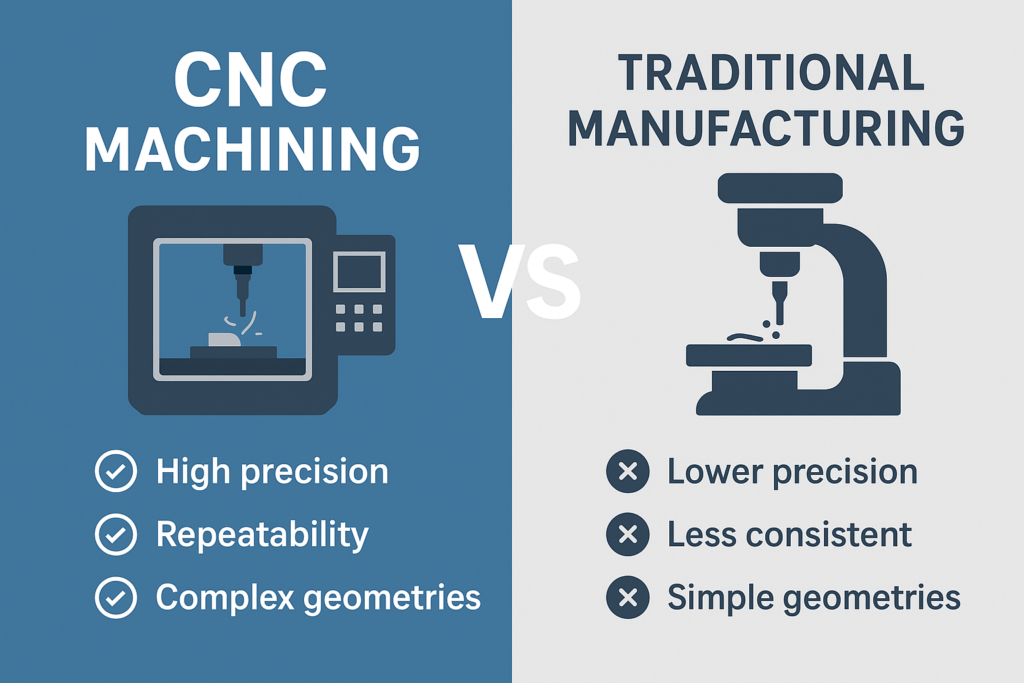
The Advantages of CNC Machining Over Traditional Manufacturing

In the evolving world of manufacturing, precision, speed, and efficiency play critical roles in determining success. Among the many production methods available today, CNC machining has proven to be one of the most reliable and effective compared to traditional manufacturing techniques. But what exactly makes CNC machining superior, and why should businesses consider it over conventional processes? Let’s dive into the key advantages.

The Advantages of CNC Machining Over Traditional Manufacturing Read More »

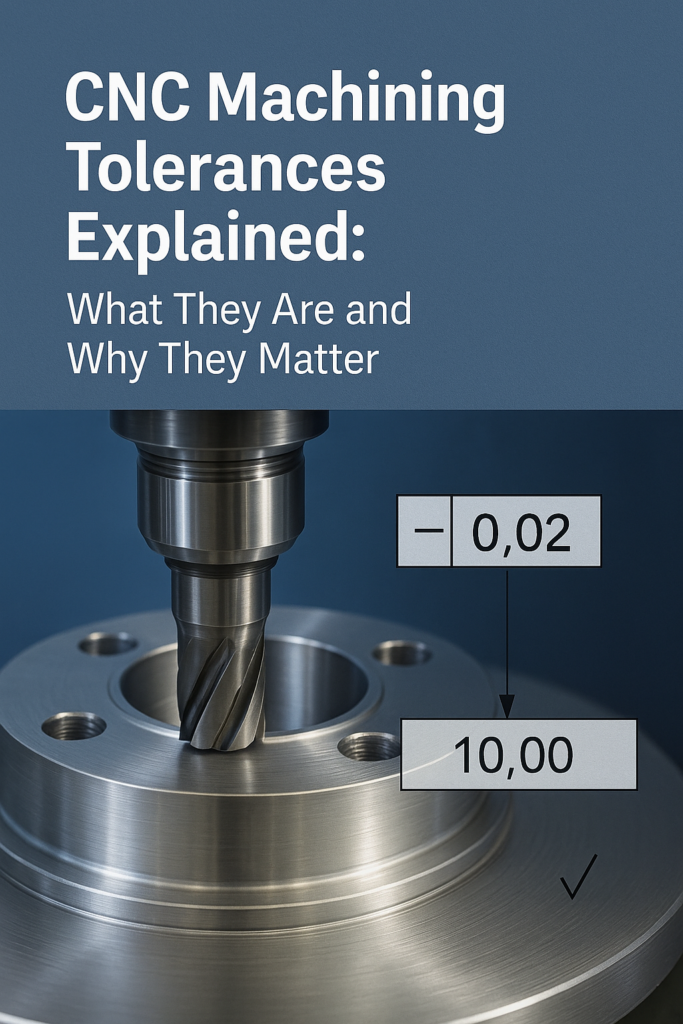
CNC Machining Tolerances Explained: What They Are and Why They Matter

When it comes to precision manufacturing, few terms are as important—or as misunderstood—as tolerances. Whether you’re creating a prototype or mass-producing parts, understanding CNC machining tolerances is essential to ensuring your parts fit, function, and last as intended. In this article, we break down what tolerances mean in CNC machining, the different tolerance grades, and

CNC Machining Tolerances Explained: What They Are and Why They Matter Read More »

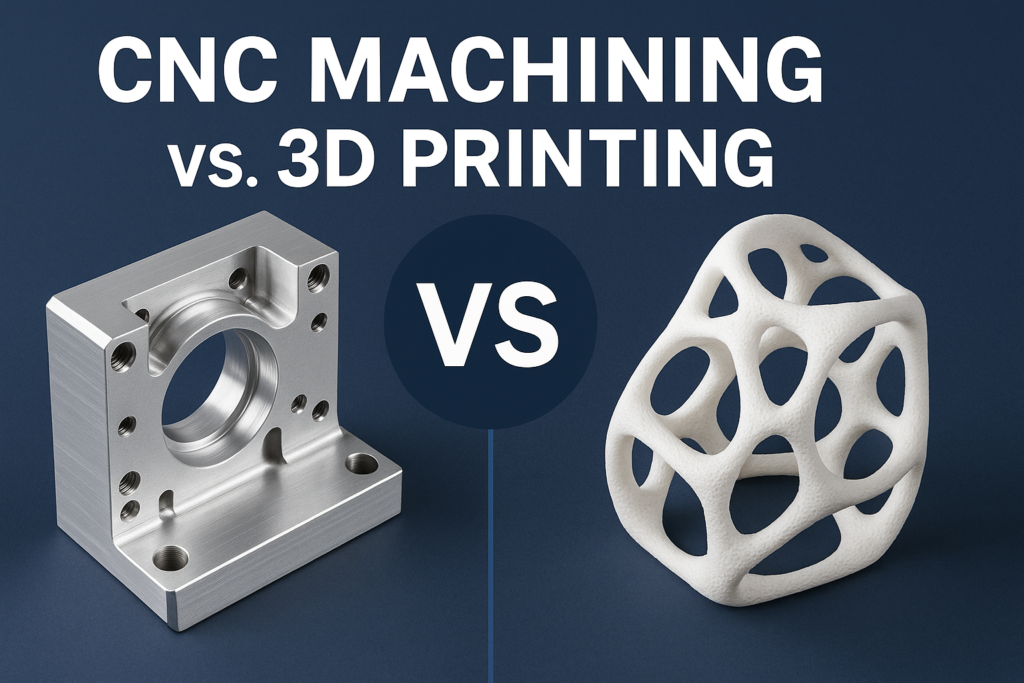
CNC Machining vs. 3D Printing: Which Manufacturing Process is Right for You?

As manufacturing continues to evolve, two technologies stand out for their innovation and versatility: CNC machining and 3D printing. Each method has its strengths, and choosing the right one depends on your project’s specific needs.In this article, we’ll break down the key differences between CNC machining and 3D printing to help you make an informed decision.

CNC Machining vs. 3D Printing: Which Manufacturing Process is Right for You? Read More »

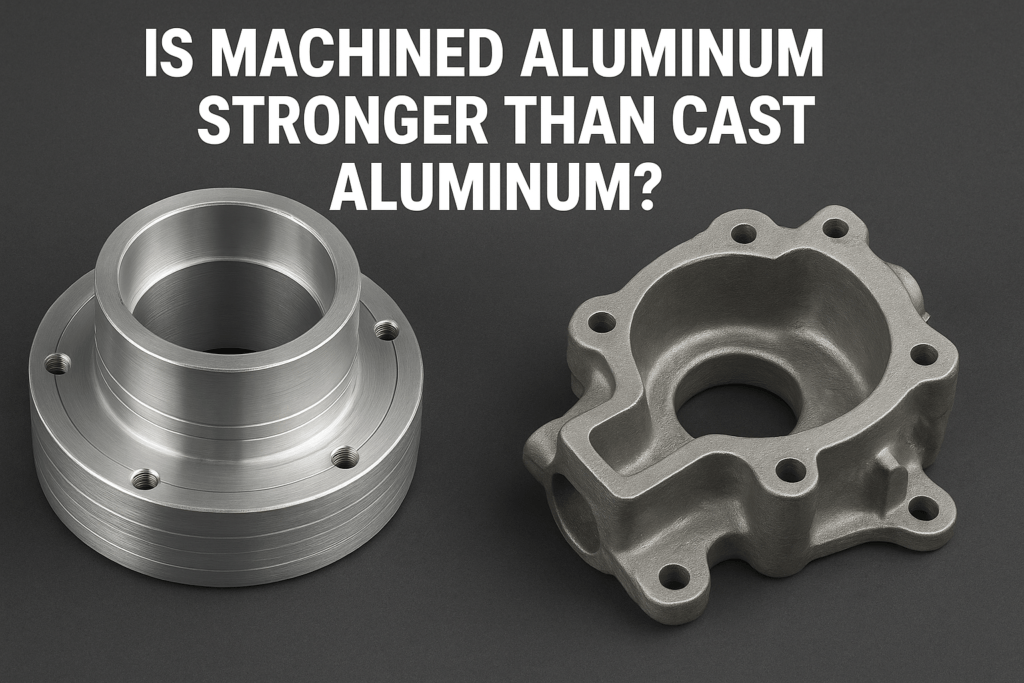
Is machined aluminum stronger than cast aluminum?

Ensuring the right choice between machined aluminum and cast aluminum is crucial in industries such as aerospace, automotive, and precision engineering. Strength is often the deciding factor, but the answer isn’t as simple as picking one over the other. Both materials have unique properties influenced by alloy type, processing methods, and intended applications. In this

Is machined aluminum stronger than cast aluminum? Read More »

Scroll to Top