Finding a CNC machining supplier is easy. Finding one you can trust with production parts, tight deadlines, and zero-defect requirements is a different challenge entirely. The global market is flooded with options — from local job shops to overseas factories — and the difference between a reliable long-term partner and a costly mistake often isn’t obvious until a shipment arrives late, wrong, or not at all.
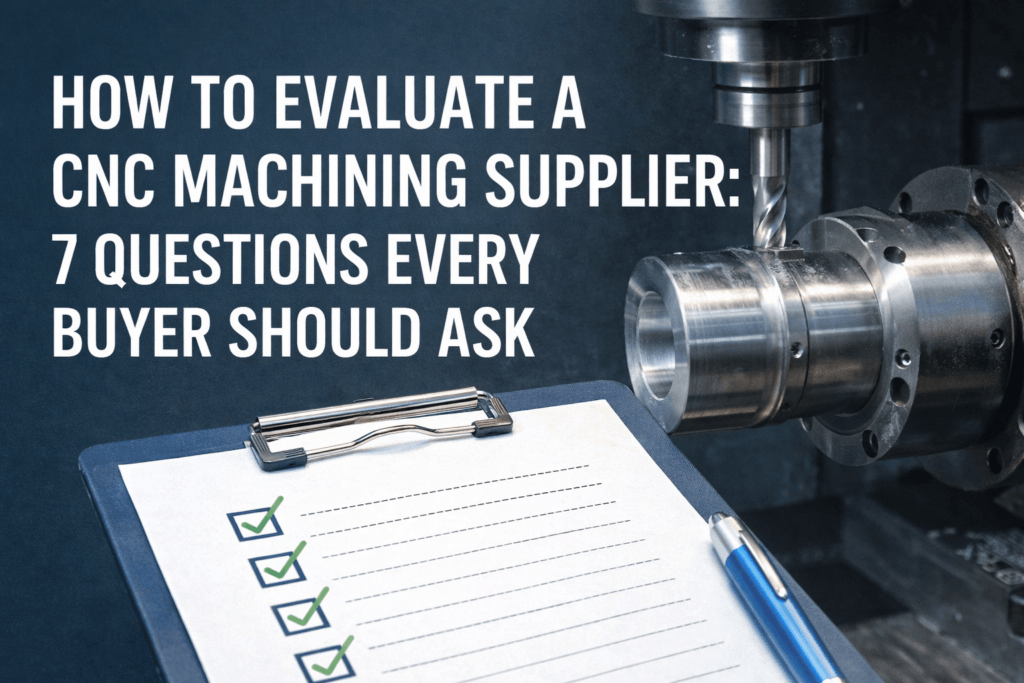
Here are seven questions that experienced procurement engineers use to separate capable CNC suppliers from the ones that just look good on paper.
1. Do They Own Their Machines — Or Are They a Middleman?
This is the single most important question you can ask. Trading companies and brokers often present themselves as manufacturers, complete with polished websites and fast quote turnarounds. But if they don’t own the machines, they have no control over your production.
A genuine CNC machining factory will be able to tell you exactly which machines run which operations, what their capacity looks like, and who is responsible for quality at each stage. Ask for a factory photo, a video walkthrough, or a live video call from the shop floor. A real manufacturer will welcome this without hesitation.
2. What Tolerances Can They Actually Hold — Consistently?
Many suppliers claim to hold ±0.01mm tolerances. Fewer can prove it consistently across a full production run. The distinction matters enormously when you’re sourcing precision components for medical devices, aerospace assemblies, or high-performance mechanical systems.
Ask for inspection data from recent orders — not just capability statements. A reliable supplier will have CMM (Coordinate Measuring Machine) reports, first article inspection records, and process control documentation. If they can’t produce these on request, their tolerance claims are marketing, not manufacturing reality.
3. How Do They Handle a Problem Part?
Every machining operation produces occasional non-conforming parts. The question isn’t whether problems happen — it’s what happens next. Ask prospective suppliers directly: “Walk me through your process when a part fails inspection.” The answer tells you everything about their quality culture.
A good supplier has a documented non-conformance procedure, knows who makes the call to accept or reject borderline parts, and initiates corrective action to prevent recurrence. A bad supplier blames the drawing, offers a discount, and ships the same issue again next time.
4. What Materials Do They Regularly Work With?
Material breadth matters — but so does material depth. A supplier who “can machine” titanium but has only done it twice is a different proposition from one who machines Ti-6Al-4V weekly for aerospace clients. Ask not just what materials they offer, but which ones they machine most frequently and for which industries.
For reference, a capable full-service CNC shop should be comfortable with aluminum alloys (6061, 7075), stainless steel grades (304, 316, 17-4PH), engineering steels (4140, 4340), brass, copper, titanium, and common engineering plastics like PEEK, Delrin, and PTFE — across a range of customer requirements.
5. What Are Their Lead Times — and What's Their Track Record?
Lead time promises are easy to make. Ask for data. A reliable supplier knows their average lead time for prototypes vs. production orders, and can tell you their on-time delivery rate over the past quarter. If they don’t track this, that itself is a yellow flag.
Also clarify what “lead time” means. Some suppliers quote from order confirmation, others from drawing approval. Some include shipping, others don’t. Get the definition right before you build it into your project timeline.
6. Can They Provide Material Certifications and Traceability?
For regulated industries — aerospace, medical, defense, automotive — material traceability isn’t optional. You need to know that the 316L stainless steel in your parts matches the cert, and that the cert traces back to a reputable mill.
Ask whether the supplier provides mill certificates with orders, and whether they can trace material back to the source in the event of a field issue. This is standard practice for professional CNC manufacturers — and a meaningful differentiator from suppliers who source opportunistically from spot markets.
7. How Do They Communicate During Production?
Communication problems are the root cause of more CNC machining failures than technical issues. Ask how they handle ambiguous drawings — do they reach out proactively to clarify before cutting, or discover the problem after the fact? How quickly do they respond to RFQs and production questions? Do you get a dedicated point of contact or a rotating support queue?
The best CNC suppliers assign engineering contacts who understand your parts and your requirements. They flag potential issues before production starts, not after. That proactive engineering engagement is one of the most valuable — and underrated — things a machining partner can offer.
The Bottom Line
Supplier selection isn’t a one-time transaction — it’s an investment in your supply chain reliability. Asking these seven questions before placing your first order will save you significant time, money, and frustration down the line.
We encourage every prospective customer to ask us all of these questions. Our team is happy to provide factory documentation, inspection records, lead time data, and direct engineer access before you commit to a single part.
→ Contact us today to start the conversation. No sales pressure — just honest answers to your questions.