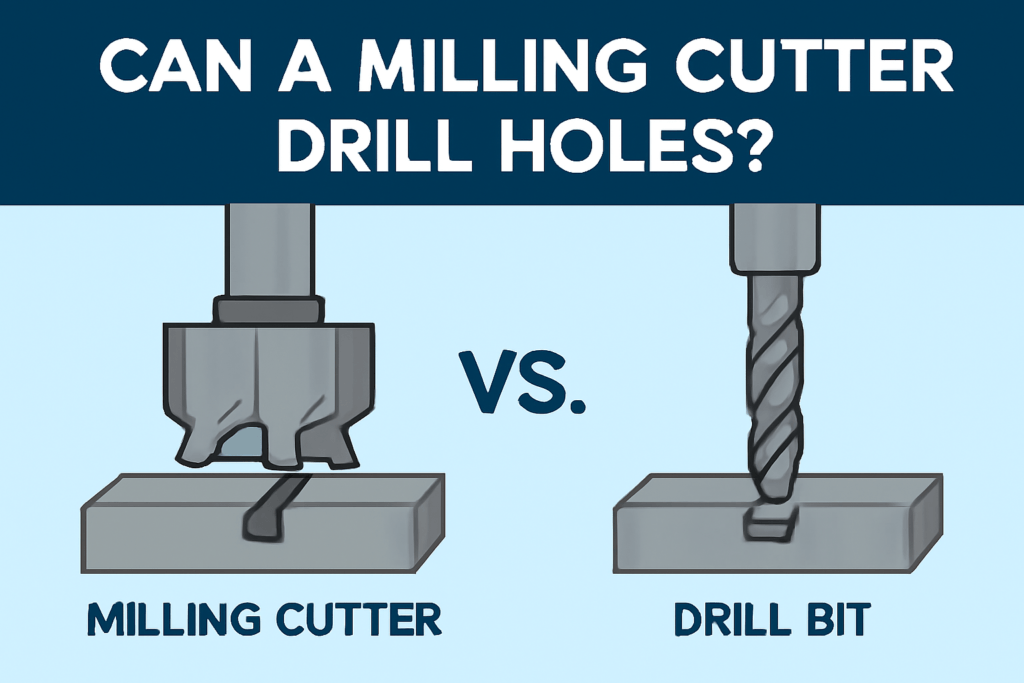
When it comes to CNC machining, one common question we often hear is: Can a milling cutter be used to drill holes? While the answer is yes, the process and capabilities of milling cutters and drill bits differ. In this blog, we’ll explore the differences between milling cutters and drill bits, and when to use each tool in your machining process.
What is a Milling Cutter?
A milling cutter is a rotating tool used in milling machines to cut, shape, and finish materials. It is available in various shapes and sizes and is used to remove material from a workpiece by moving the cutter in multiple directions. Milling cutters can be used for operations such as side milling, face milling, slotting, and more.
Types of Milling Cutters:
End mills: Used for cutting slots, contours, and surfaces.
Face mills: Primarily used for large surface areas.
Ball nose mills: Ideal for complex 3D shapes and curved surfaces.
Fly cutters: Used for fine finishes on larger surfaces.
What is a Drill Bit?
A drill bit is a tool used specifically for creating holes. It’s designed with a pointed tip and cutting edges that make it easy to penetrate a material. Drills typically operate with linear motion to bore a hole along a straight path.
Key Differences Between Milling Cutters and Drill Bits:
Cutting Action: Drill bits mainly remove material in a straight line along the axis of the hole, while milling cutters remove material in multiple directions.
Tool Geometry: Drill bits are designed with a pointed tip and spiral flutes to help with material removal and chip evacuation. Milling cutters usually have flat edges and multiple teeth to remove material in a more versatile manner.
Can a Milling Cutter Drill Holes?
Yes, but it’s not always ideal!
Milling cutters can drill holes, especially when combination tools are used, such as drill-mill cutters or milling drills. These tools have a specific geometry that allows them to perform both drilling and milling operations. However, the process may not be as efficient or precise as using a dedicated drill bit for the following reasons:
Tool Geometry: Milling cutters are not optimized for drilling, meaning they might not create as clean a hole as a drill bit.
Cutting Action: While a drill bit uses linear motion to remove material, milling cutters use rotary motion, which can result in less precise holes.
Speed and Efficiency: Drilling typically requires less power and is more efficient for making holes, while milling requires higher speeds and can lead to more wear on the tool when used for drilling.
When to Use a Milling Cutter for Drilling?
While milling cutters are not typically the first choice for drilling, there are certain scenarios where they are suitable:
1. Larger Holes and Blind Holes
Milling cutters can be used to create larger holes or blind holes (holes that do not go through the material). In these cases, a milling machine can provide better control and precision for specific hole sizes.
2. Holes with Complex Features
If you need to drill a hole with additional features—such as tapered or counterbored holes—milling cutters can be used in combination with other tools to achieve these complex geometries.
3. When Tool Availability is Limited
In some cases, when drill bits are unavailable, and the hole is relatively simple, milling cutters may serve as a backup tool.
Advantages of Using a Drill Bit Instead of a Milling Cutter for Drilling
While milling cutters can drill holes, dedicated drill bits are typically the better option for several reasons:
Better Precision: Drill bits are designed to create round, smooth holes with minimal deviation.
Faster Process: Drilling is a quicker process compared to milling, as it uses linear motion.
Lower Tool Wear: Drill bits are designed to handle the stresses of drilling and typically last longer when used for their intended purpose.
Conclusion: When to Use Milling Cutters for Drilling
In summary, while milling cutters can drill holes, drill bits are generally more suitable for the task. Milling cutters excel in applications like side milling, slotting, and facing, where the material needs to be removed in multiple directions. However, for precise, efficient hole drilling, a dedicated drill bit is often the best choice.
At T-one, we offer both CNC milling and drilling services, ensuring that we use the most appropriate tool for every job. If you’re not sure which process is right for your part, our team of engineers is always available to help you make the best decision.